
There’s a certain magic that fills the kitchen when the chill of winter begins to settle in. I found myself wrapped in a cozy blanket, seeking warmth not just from it, but from a comforting bowl of Winter Minestrone Soup. This hearty recipe melds fresh vegetables, creamy beans, and delightful pasta, making it the ultimate dish for those cold nights. Not only is this soup remarkably adaptable to whatever seasonal ingredients you have on hand, but it’s also a quick, wholesome meal that pleases every palate—perfect for busy weeknights or leisurely gatherings. Whether you want to warm up after a long day or impress a loved one at dinner, this dish is your new go-to. Ready to discover the soul-soothing flavors of this minestrone delight? Let’s dive in!
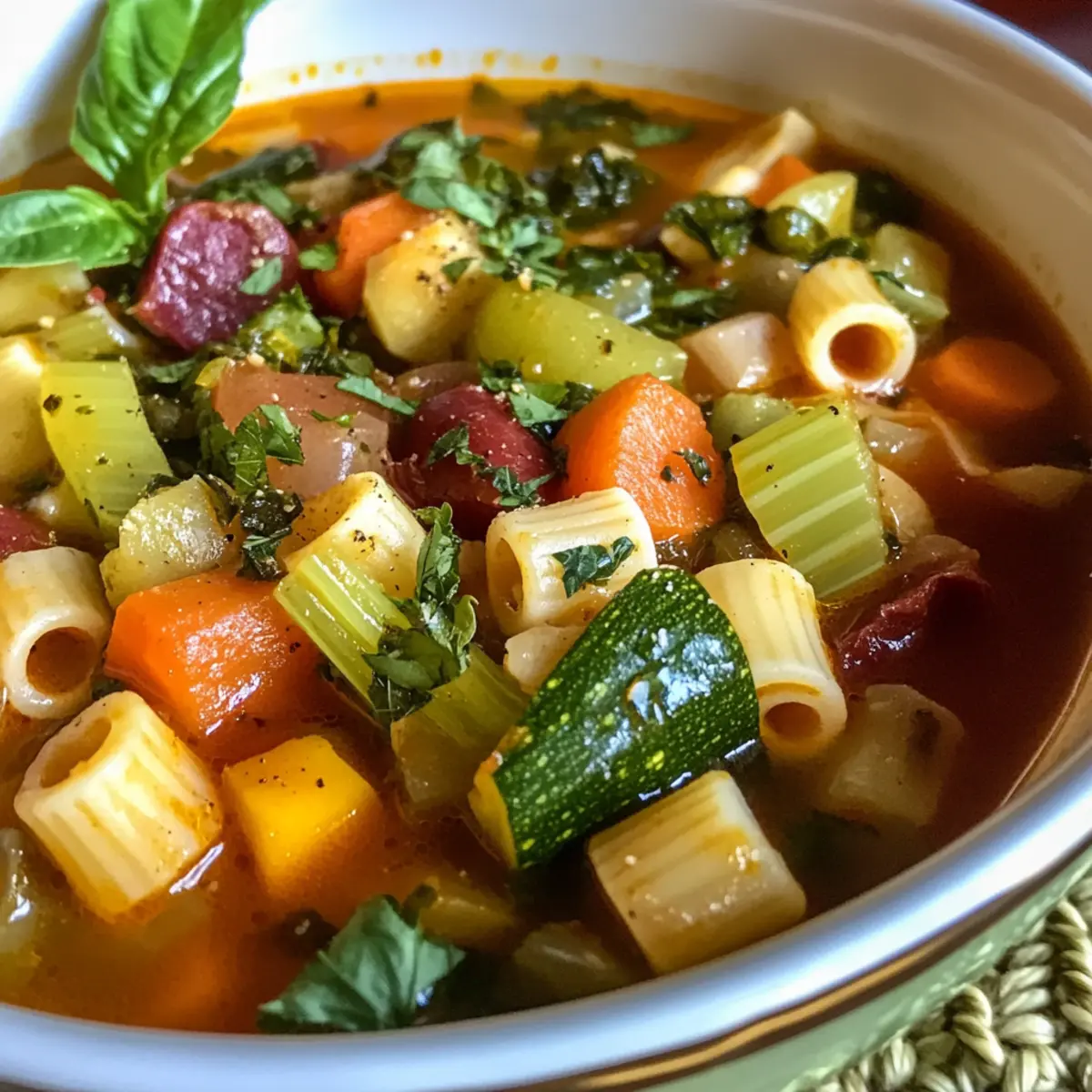
Why is Winter Minestrone Soup a must-try?
Hearty, warming comfort: This soup embodies the essence of winter with its rich flavors and hearty ingredients that wrap you in a cozy embrace.
Versatile and adaptable: You can effortlessly swap in seasonal veggies or your favorite pasta, making it perfect for whatever you have on hand.
Quick and easy: With straightforward steps, this recipe ensures even the busiest cooks can whip up a nourishing meal in no time.
Crowd-pleasing appeal: Whether it’s a family dinner or a cozy gathering, the delicious mix of beans, veggies, and pasta will have everyone coming back for seconds!
Nutritionally rich: Packed with fiber and nutrients, it’s a wholesome option you can feel good about serving. For more cozy soup inspirations, check out our Bean Soup Cozy and Turkey Noodle Soup recipes!
Winter Minestrone Soup Ingredients
• Discover the essential ingredients that create the ultimate comfort in a bowl!
For the Soup Base
- Vegetable Broth – Acts as the flavorful foundation; substitute with water for a lighter option.
- Onion – Builds a savory depth; yellow or white onions are best.
- Garlic – Enhances every flavor with its aromatic touch; fresh garlic is preferred, but garlic powder works in a pinch.
For the Vegetables
- Carrots – Adds sweetness and vibrant color; parsnips can be a nice alternative.
- Celery – Provides crunch and an aromatic base; can be omitted if desired.
- Zucchini – Contributes a tender texture; swap for yellow squash if needed.
- Green Beans – Offers crispness; replace with peas if they’re out of season.
- Spinach or Kale – Boosts nutrition and presents beautiful green hues; city-dwellers can use Swiss chard or frozen greens.
For the Pasta & Beans
- Pasta (small shapes like ditalini or elbows) – Adds heartiness to the soup; gluten-free pasta or lentils make excellent substitutes.
- Canned Beans (e.g., kidney or cannellini) – Introduces protein and creaminess; any beans will work, including chickpeas.
For Seasoning
- Herbs (e.g., basil, thyme) – Infuses fresh flavor into the dish; dried herbs can substitute, using half the amount.
- Salt and Pepper – Elevates the overall taste; adjust to your personal preference.
Step‑by‑Step Instructions for Winter Minestrone Soup
Step 1: Sauté the Base
In a large pot, heat 2 tablespoons of olive oil over medium heat. Once shimmering, add 1 diced onion, 2 diced carrots, and 2 diced celery stalks. Sauté the mixture for about 5–7 minutes, stirring occasionally, until the vegetables are softened and translucent. This aromatic base is essential for your Winter Minestrone Soup.
Step 2: Elevate with Garlic
Stir in 3 cloves of minced garlic and cook for an additional 1–2 minutes, until fragrant. Be careful not to let the garlic brown; you want it to enhance the other flavors. The scent will fill your kitchen, inviting everyone to gather for a comforting bowl of soup.
Step 3: Add the Broth
Pour in 6 cups of vegetable broth and bring the mixture to a gentle simmer. Keep the heat medium-high until it bubbles, then reduce to a medium-low heat for about 10 minutes. This allows the flavors to meld beautifully while you prepare the remaining ingredients for your hearty Winter Minestrone Soup.
Step 4: Incorporate the Vegetables
Add 1 diced zucchini and 1 cup of chopped green beans to the pot. Stir in 1 cup of small pasta, such as ditalini or elbows. Increase the heat slightly and cook for an additional 8–10 minutes, or until the pasta is al dente and the vegetables are tender yet retain their vibrant color.
Step 5: Mix in the Beans and Greens
Carefully stir in 1 can (approximately 15 ounces) of drained and rinsed beans, like kidney or cannellini, along with 2 cups of fresh spinach or kale. Cook for another 2–3 minutes, just until the greens have wilted down, adding nutrition and richness to your Winter Minestrone Soup.
Step 6: Final Seasoning
Sprinkle in your choice of herbs, like 1 teaspoon of dried basil and 1 teaspoon of thyme, along with salt and pepper to taste. Stir well and let the soup simmer for another 5 minutes to integrate the flavors. Adjust the seasoning as needed for a deliciously satisfying finish.
Step 7: Serve and Enjoy
Ladle the piping hot Winter Minestrone Soup into bowls, garnishing with fresh herbs or a sprinkle of grated cheese if desired. Paired with crusty bread or a side salad, this soup is perfect for warming up chilly evenings. Enjoy the comforting flavors and cozy atmosphere this dish brings to your home!
Storage Tips for Winter Minestrone Soup
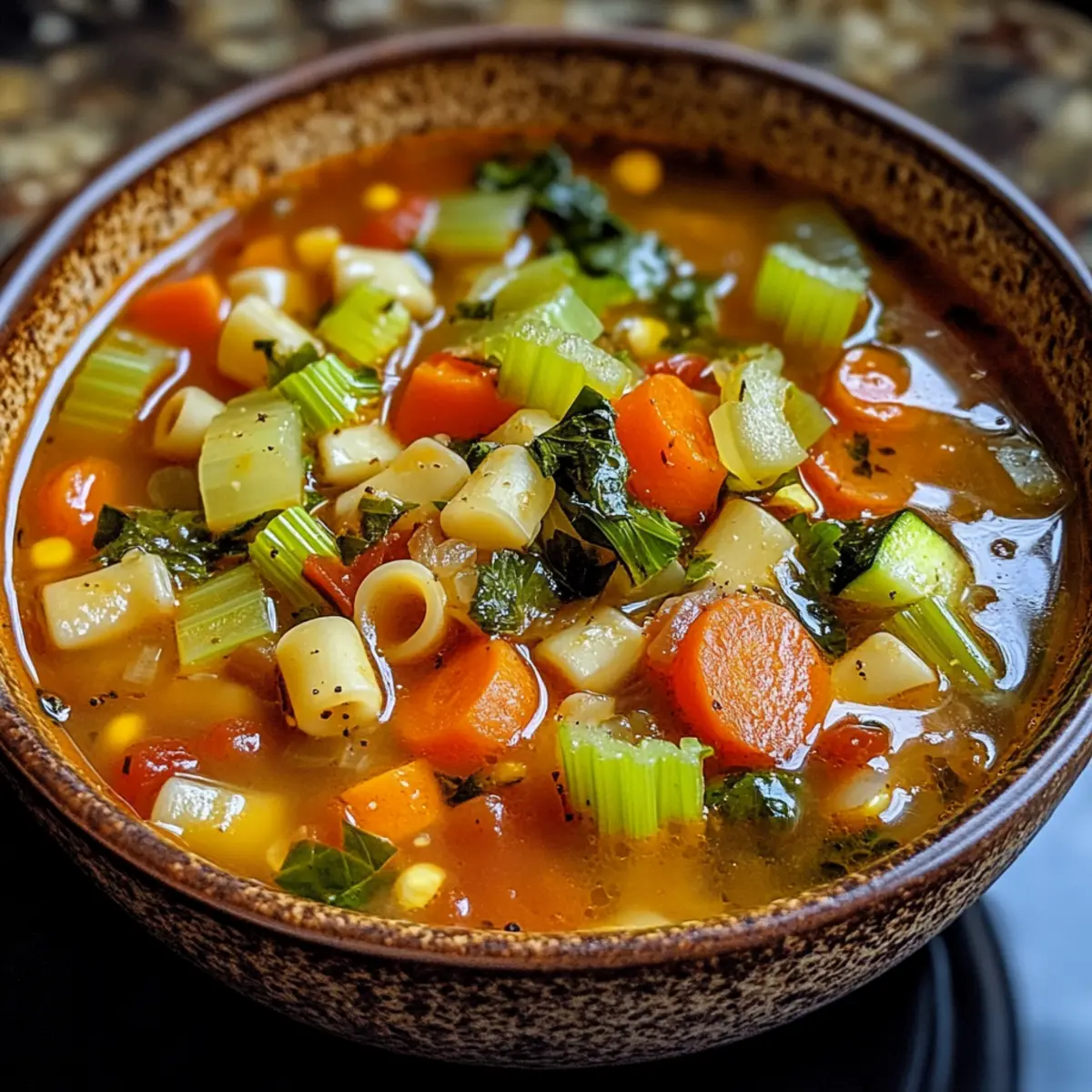
Fridge: Store your Winter Minestrone Soup in an airtight container in the refrigerator for up to 5 days to maintain freshness and flavor.
Freezer: If you want to extend its life, freeze the soup in freezer-safe containers for up to 3 months. Leave about an inch of space at the top for expansion.
Reheating: To reheat, gently warm on the stovetop over medium heat, adding a splash of vegetable broth if needed to loosen the soup. Microwave in increments for convenient reheating, stirring in between.
Thawing: When you’re ready to enjoy it, thaw frozen soup overnight in the fridge or use the defrost setting on your microwave, ensuring it’s heated thoroughly before serving.
Expert Tips for Winter Minestrone Soup
-
Fresh Ingredients: Use seasonal vegetables whenever possible. They enhance flavor and provide the best quality for your Winter Minestrone Soup.
-
Avoid Overcooking: Keep the vegetables slightly firm to retain their color and nutrients. This ensures a beautiful presentation and a nutritious meal.
-
Creamy Texture: For a thicker consistency, blend a portion of the soup before adding the greens. This adds creaminess while maintaining hearty chunks.
-
Herb Adjustments: Fresh herbs are best, but if using dried, remember to use half the quantity. Taste as you go to perfect the seasoning in your Winter Minestrone Soup.
-
Leftover Magic: Don’t hesitate to use up leftover vegetables or beans. The adaptability of this recipe means it welcomes creativity!
Winter Minestrone Soup Variations
Feel free to get creative with this recipe, adding your personal touch to make it uniquely yours!
- Vegetable Swap: Use different seasonal vegetables like sweet potatoes or butternut squash for a twist on the classic flavor profile.
- Protein Boost: For a heartier meal, add shredded chicken or Italian sausage, transforming the soup into a filling entrée.
- Spicy Kick: If you love heat, sprinkle in some red pepper flakes or add a dash of hot sauce to elevate the warmth.
- Gluten-Free: Substitute traditional pasta with gluten-free pasta or lentils, ensuring everyone can enjoy this delicious dish.
- Creamy Addition: Blend a portion of the soup before adding greens for a creamy texture that’s comforting and satisfying.
- Herb Variety: Experiment with different herbs like rosemary or oregano, each bringing a new dimension of flavor to your soup.
- Cheesy Bliss: Stir in some grated Parmesan or pecorino cheese right before serving for indulgent creaminess that melts beautifully.
- Bean Variety: Swap out the usual beans for chickpeas or lentils to introduce different textures and flavors, enhancing the richness of your Winter Minestrone Soup.
Explore these variations as you craft your perfect bowl, and if you crave more cozy soups, don’t miss our Coconut Curry Soup for a fragrant adventure!
What to Serve with Hearty Winter Minestrone Soup
Imagine a cozy dinner table filled with warmth and rich aromas, perfectly complemented by delightful sides that elevate your minestrone experience.
-
Crusty Bread: A slice of freshly baked artisan bread is perfect for dipping and soaking up every little bit of that hearty broth.
-
Garlic Breadsticks: Soft and warm, these breadsticks add a satisfying crunch and a burst of flavor, enhancing the winter warmth of the soup.
-
Side Salad: A vibrant mixed green salad with a tangy vinaigrette adds a refreshing contrast to the rich soup, brightening each bite.
-
Cheesy Gratin: A bubbling dish of cheesy gratin provides that creamy, indulgent element to balance the soup’s wholesome goodness.
-
Roasted Vegetables: Seasoned root vegetables like carrots and parsnips will harmonize beautifully with the minestrone’s fresh flavors while adding caramelized sweetness.
-
Herbed Rice: Lightly flavored with lemon and fresh herbs, a fluffy side of rice complements the soup, making it feel like an extravagant dinner.
Pairing these sides with your Winter Minestrone Soup creates a complete, comforting meal that will surely please everyone at your table!
Make Ahead Options
This Winter Minestrone Soup is perfect for busy meal preppers! You can chop vegetables and sauté the base (onions, carrots, and celery) up to 24 hours in advance, storing them in an airtight container in the refrigerator. Additionally, the soup can be fully prepared and cooled, then refrigerated for up to 3 days or frozen for up to 3 months. To maintain its delicious flavor, store beans and greens separately until you’re ready to serve. When it’s time to enjoy your soup, simply reheat on the stove, adding in the spinach or kale to wilt just before serving for the freshest taste. Enjoy effortless, comforting meals even on your busiest days!
Winter Minestrone Soup Recipe FAQs
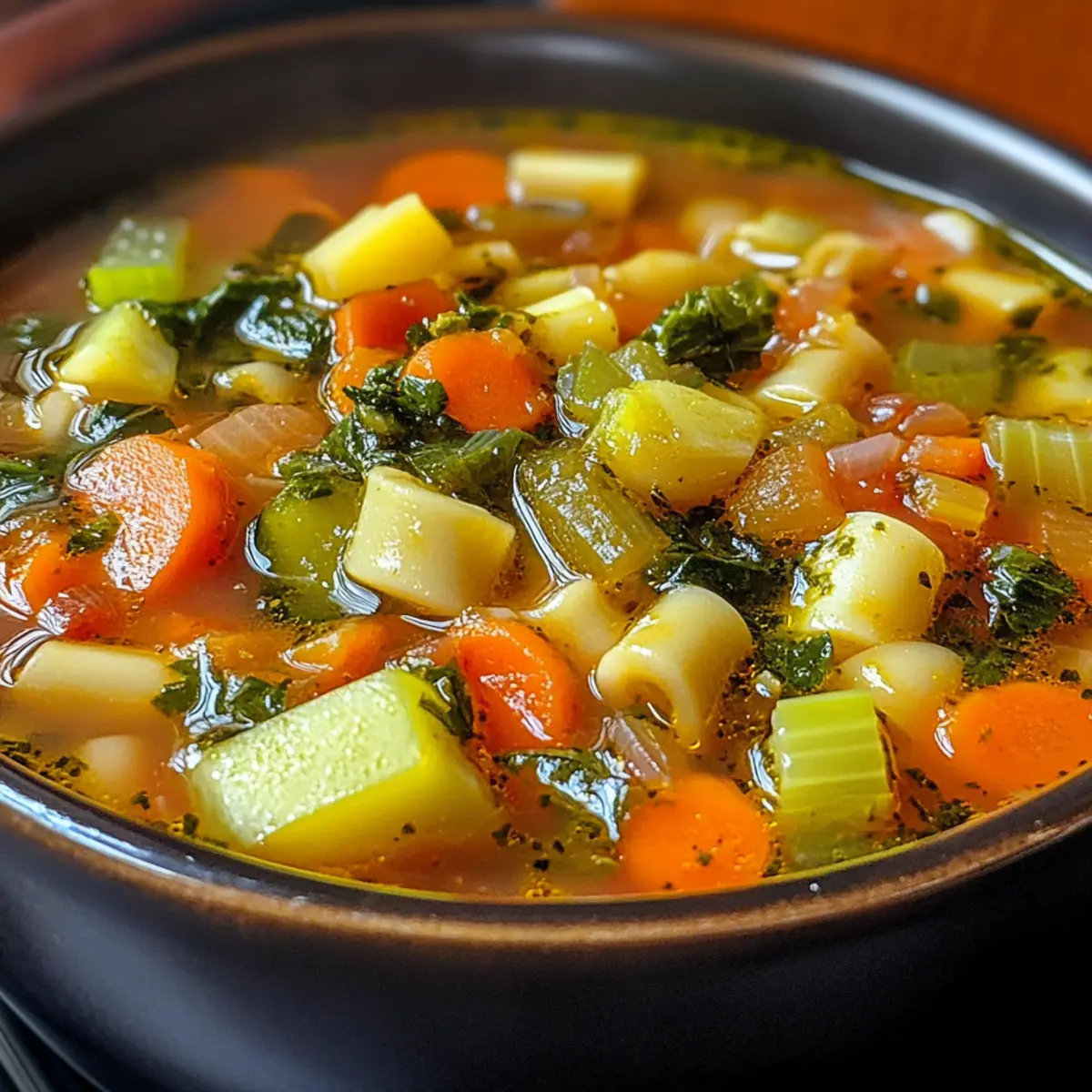
Which vegetables should I use for the best Winter Minestrone Soup?
Absolutely! Fresh, seasonal vegetables make the biggest difference. Carrots, celery, zucchini, and green beans are traditional favorites, but you can also add sweet potatoes or butternut squash for a twist. Just remember, the key is to use vibrant, firm vegetables that aren’t overly ripe, as they can turn mushy when cooked.
How should I store my Winter Minestrone Soup, and how long will it last?
This comforting soup can be stored in an airtight container in the refrigerator for up to 5 days. To ensure it stays fresh, let it cool completely before sealing it. For longer storage, you can freeze the soup for up to 3 months. Just remember to leave an inch of space at the top of the container to allow for expansion during freezing!
Can I freeze Winter Minestrone Soup, and how do I do it?
Yes, you can freeze it! First, let the soup cool down to room temperature. Then, pour it into freezer-safe containers or heavy-duty freezer bags. Make sure to label the date on each container. When you’re ready to enjoy it, simply thaw it overnight in the refrigerator and reheat gently on the stovetop, adding a splash of broth if needed.
What should I do if my Winter Minestrone Soup is too thick?
If your soup turns out thicker than you’d like, don’t worry! Just add a little warm vegetable broth or water while gently stirring over medium heat until you reach your desired consistency. Taste again and adjust the seasonings as necessary, ensuring every bowl is full of flavor!
Are there any dietary considerations I should keep in mind?
Absolutely! This Winter Minestrone Soup is incredibly adaptable to various dietary needs. For a gluten-free version, simply replace regular pasta with gluten-free options or lentils. If you’re accommodating allergies, ensure that your canned beans don’t contain any unwanted additives. It’s even pet-friendly if you omit any seasoning and use low-sodium ingredients—they’ll appreciate a little taste of this wholesome dish!
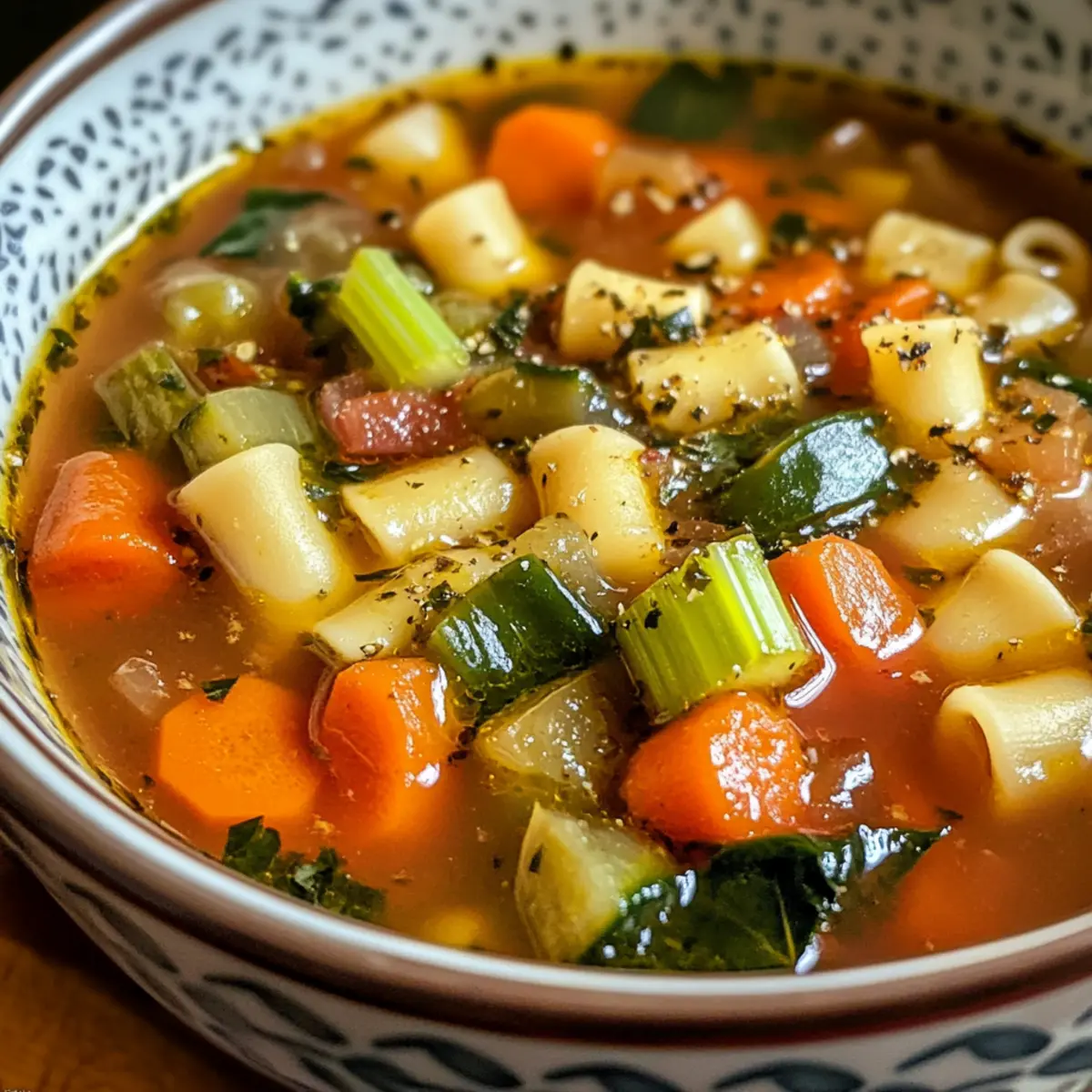
Warm Up with Hearty Winter Minestrone Soup You'll Love
Ingredients
Equipment
Method
- In a large pot, heat 2 tablespoons of olive oil over medium heat. Add the diced onion, carrots, and celery. Sauté for about 5–7 minutes until softened and translucent.
- Stir in minced garlic and cook for an additional 1–2 minutes until fragrant.
- Pour in the vegetable broth and bring to a gentle simmer. Cook for about 10 minutes.
- Add the diced zucchini and chopped green beans. Stir in the pasta and cook for another 8–10 minutes until pasta is al dente.
- Carefully stir in the drained beans and fresh spinach or kale. Cook for another 2–3 minutes until greens have wilted.
- Add herbs, salt, and pepper, simmer for another 5 minutes to integrate flavors.
- Ladle the soup into bowls and serve with garnishes.
Leave a Reply