
As I was flipping through my favorite cookbooks one afternoon, the aromas of Thai cuisine began to dance around me, beckoning me to embrace their vibrant flavors. This Thai-Inspired Salmon Coconut Curry is not just a dish; it’s a spirited experience that transforms weeknight dinners into something truly special. With tender, pan-seared salmon cradled in a creamy, fragrant coconut sauce, this recipe offers a comforting meal that’s both easy to prepare and oh-so-satisfying. You’ll love how it combines the richness of coconut milk with the delightful heat of red curry, making it a high-protein delight that’s gluten-free when using the right fish sauce. Ready to escape to Thailand without leaving your kitchen? Let’s dive into this mouthwatering recipe together!
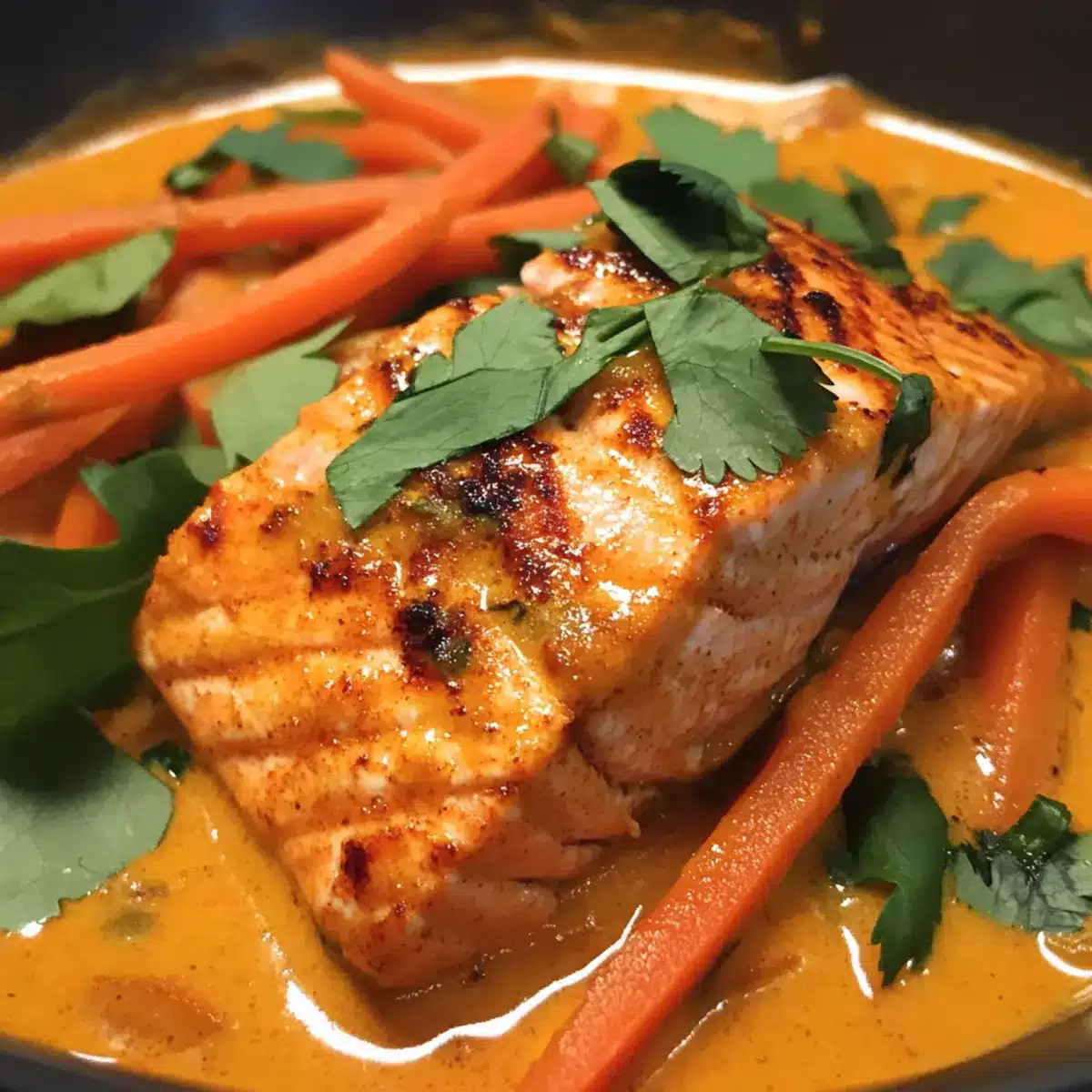
Why is Salmon Coconut Curry a must-try?
Unique flavors: This dish brings the vibrant essence of Thai cuisine right to your table, blending creamy coconut milk with spicy red curry for a taste sensation that excites your palate.
Quick and easy: With minimal prep time and simple steps, dinner is ready in no time, making it perfect for busy nights.
Versatile options: Swap out salmon for your favorite fish or even tofu for a delightful vegetarian twist!
Crowd-pleaser: Impress family and friends alike with its rich flavors and beautiful presentation; it’s a showstopper!
For more comforting ideas, you might also enjoy my Coconut Curry Soup, which offers a cozy, warming experience perfect for any meal.
Salmon Coconut Curry Ingredients
For the Salmon
• Fresh Salmon – Use high-quality fillets for the best flavor and flaky texture.
• Salt & Pepper – Essential for enhancing the natural flavors of the salmon.
For the Cooking Base
• Olive Oil – Ideal for cooking; a neutral oil can also work.
• Butter – Adds richness; substitute with more olive oil for a dairy-free option.
• Chopped Onion – Provides a savory foundation; yellow or white onion is preferred.
• Minced Garlic – Fresh garlic adds aromatic depth to your curry.
• Thai Red Curry Paste – The star for achieving that signature spicy kick; adjust to taste.
• Fish Sauce – A must for authentic flavor; gluten-free fish sauce is available if needed.
For the Sauce
• Full-Fat Coconut Milk – Creates the creamy and comforting base; choose high-quality canned varieties.
• Brown Sugar – Balances the flavors with a touch of sweetness.
For the Veggies
• Matchstick Carrots – Adds color and crunch; pre-cut or julienne for convenience.
• Chopped Broccolini – Provides a nutritious aspect; tender broccoli florets can be a substitute.
For the Finish
• Lime Juice – Freshly squeezed is best for brightening the dish’s flavors.
• Fresh Basil – Adds a fragrant touch; Thai basil is an excellent substitute for more authenticity.
• Chopped Fresh Cilantro – Optional, but it complements the dish beautifully; feel free to omit if you’re not a fan.
This Salmon Coconut Curry is an enticing combination of flavors and textures that will transport you to the heart of Thai cuisine right at home!
Step‑by‑Step Instructions for Salmon Coconut Curry
Step 1: Prepare the Salmon
Begin by cutting fresh salmon fillets into four equal pieces and patting them dry with a paper towel. Season both sides generously with salt and pepper for enhanced flavor. Allow the salmon to come to room temperature while you prep the other ingredients, ensuring even cooking throughout.
Step 2: Sear the Salmon
In a large skillet, heat 1 tablespoon of olive oil and 1 tablespoon of butter over medium-high heat. Once the butter has melted and the mixture is sizzling, carefully place the salmon fillets skin-side down in the skillet. Sear for about 5 minutes, or until the skin is crispy and the salmon is nearly opaque halfway up the sides.
Step 3: Flip the Salmon
Gently flip the salmon fillets using a spatula and continue cooking for an additional 2 to 3 minutes, or until the fish is just cooked through. The salmon should easily flake with a fork but remain moist. Once done, transfer the salmon to a plate and cover it loosely with foil to keep warm while you build the creamy coconut curry sauce.
Step 4: Sauté the Aromatics
Reduce the oil in the skillet to about 1 tablespoon and add the chopped onion. Sauté over medium heat for approximately 3 minutes, stirring frequently, until the onion is slightly browned and fragrant. This creates a flavorful base for your Salmon Coconut Curry.
Step 5: Add Garlic and Curry Paste
Stir in the minced garlic and Thai red curry paste, cooking for about 1 minute, until the garlic becomes aromatic and the curry paste is well combined with the onions. You’ll notice the vibrant colors and delicious scents starting to develop, setting the stage for the rich sauce to come.
Step 6: Combine the Sauce Ingredients
Pour in the fish sauce, followed by the full-fat coconut milk, brown sugar, matchstick carrots, and chopped broccolini. Bring the mixture to a gentle bubble over medium heat. Allow it to cook for about 5 minutes, stirring occasionally, until the vegetables are tender-crisp and the sauce has slightly thickened.
Step 7: Finish with Lime and Salmon
Add freshly squeezed lime juice to the pan, giving the sauce a bright and zesty kick. Carefully return the salmon fillets to the skillet, spooning some sauce over them. Heat everything together for an additional 2 minutes, just enough to warm the salmon through without overcooking it.
Step 8: Garnish and Serve
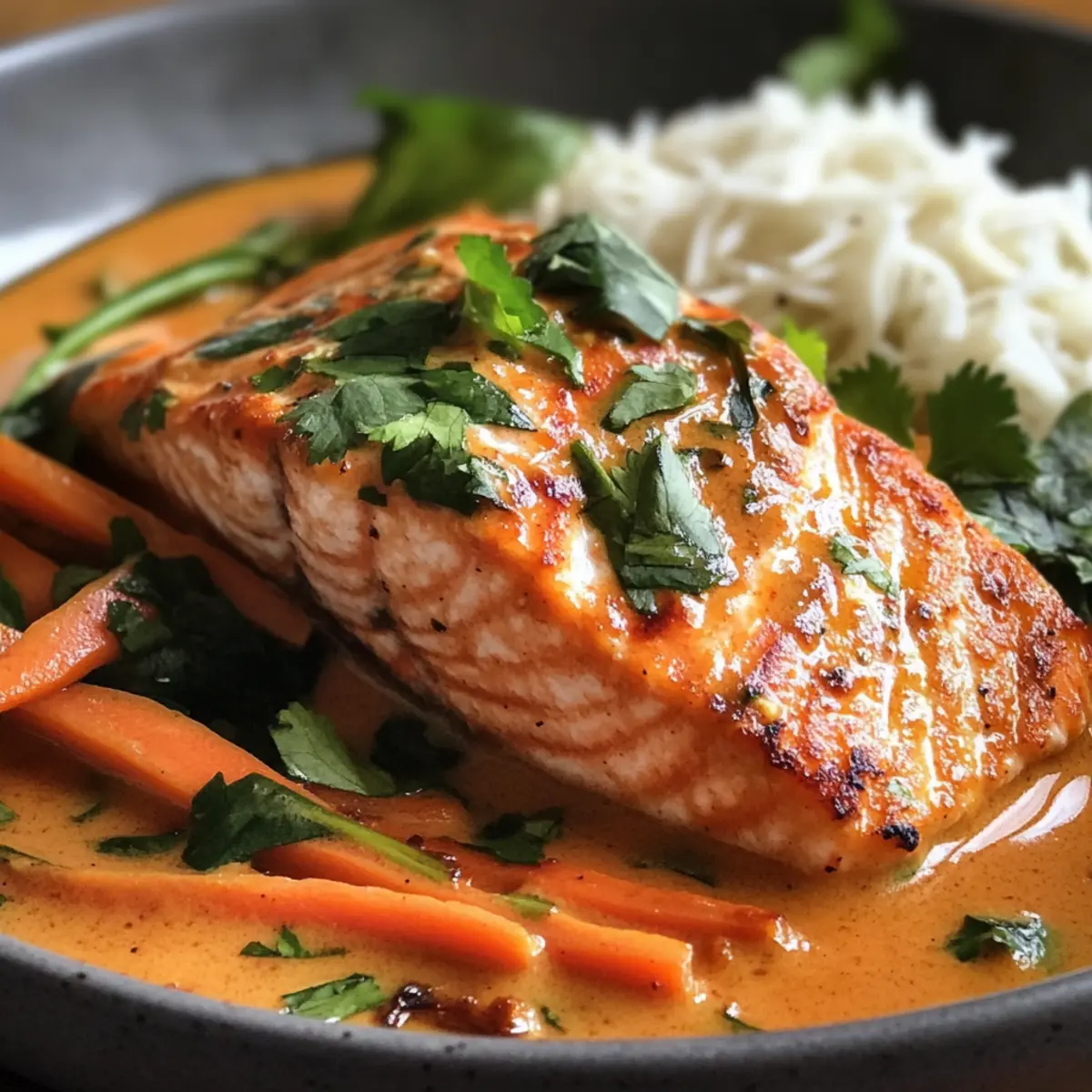
Taste the sauce and adjust the seasoning with salt and pepper as needed. Once perfect, sprinkle fresh basil and chopped cilantro over the top for a burst of flavor and color. Serve your delicious Salmon Coconut Curry immediately, ideally over a bed of fluffy jasmine rice or quinoa to soak up that irresistible sauce.
Salmon Coconut Curry Variations
Feel free to explore these delightful twists to make your Salmon Coconut Curry truly your own! Each variation promises to bring a unique flavor and texture that’ll excite your taste buds.
-
Tofu Swap: Replace salmon with firm tofu for a vegan option. Simply press and cube the tofu, then sear until golden brown.
-
Different Fish: Use fresh cod or halibut instead of salmon for a milder flavor. Either fish holds up well in the creamy sauce.
-
Chili Heat: Add fresh sliced red chilies or a pinch of cayenne pepper for an extra kick. Adjust the level to suit your spice tolerance for a fiery experience!
-
Vegetable Medley: Substitute broccolini with fresh spinach or snap peas for a pop of color and crunch. They’ll add a fresh and delightful texture to the dish.
-
Coconut Cream Boost: To enhance creaminess, double the quantity of coconut milk. This will also give your curry a luscious texture that’s comforting and rich.
-
Herb Variations: Swap basil for cilantro or try adding mint for a refreshing twist. Each herb brings its own unique flavor story to your curry.
-
Sweet Spot: Experiment with different sweeteners like honey or maple syrup instead of brown sugar. They’ll each provide a slightly different sweetness that you might just fall in love with.
-
Curry Paste Options: Use green or yellow curry paste instead of red for a different flavor profile. Each variety brings its own personality to the dish!
If you’re craving variety, check out my comforting Coconut Curry Soup for another delicious Thai-inspired option. With these variations, your cooking adventure will surely be filled with excitement and flavor!
What to Serve with Salmon Coconut Curry
As you savor the creamy and vibrant flavors of this dish, consider complementing it with a few perfect pairings to create a well-rounded meal.
-
Jasmine Rice: The classic pairing for Thai dishes, it offers a fluffy texture that absorbs the rich coconut sauce beautifully.
-
Quinoa: A nutty alternative to rice, it’s high in protein and adds a delightful chewiness to balance the creaminess of the curry.
-
Steamed Bok Choy: Adds a refreshing crunch with earthy notes, enhancing the dish’s overall flavor profile.
-
Crispy Spring Rolls: These provide a fun contrast with their crisp exterior and fresh fillings, making for a delightful appetizer to start your meal.
-
Peanut Satay Sauce: Drizzling this on grilled vegetables can create an unexpected twist, introducing a rich, nutty flavor that pairs wonderfully.
-
Mango Salad: A fresh, fruity salad can brighten your meal with a sweet and tangy kick, lifting the rich flavors of the curry.
-
Coconut Milk Smoothie: Blending tropical fruits with coconut milk creates a refreshing drink that ties in with the curry’s creamy essence.
-
Lemon Sorbet: End your meal on a light note with this palate-cleansing dessert; its zesty flavor will perfectly complement the richness of your main dish.
Expert Tips for Salmon Coconut Curry
-
Fresh Ingredients: Always opt for fresh salmon and aromatic ingredients to elevate the flavors in your Salmon Coconut Curry. Freshness makes a noticeable difference!
-
Room Temperature: Bring your salmon to room temperature before cooking to ensure it cooks evenly. This prevents any potential overcooking and keeps it moist.
-
Adjusting Heat: When using Thai red curry paste, start with a smaller amount and add more as needed. This allows you to tailor the heat level to your liking without overpowering the dish.
-
Non-Stick Skillet: If your salmon sticks to the pan, let it cook longer before flipping. A quality non-stick skillet can help avoid this issue.
-
Creaminess Check: To achieve the creamiest Salmon Coconut Curry, use high-quality full-fat coconut milk. Some brands offer creamier textures than others, so don’t hesitate to experiment!
-
Taste and Adjust: Before serving, always taste the curry sauce and adjust seasoning if necessary. A little extra fish sauce or lime juice can harmonize and bring out the flavors beautifully.
How to Store and Freeze Salmon Coconut Curry
Fridge: Store your Salmon Coconut Curry in an airtight container for up to 3 days. Gently reheat on the stovetop or in the microwave for a quick meal.
Freezer: For longer storage, freeze the curry in an airtight container for up to 2 months. Thaw in the refrigerator overnight before reheating.
Reheating: Always reheat gently over low heat, stirring occasionally to maintain the curry’s creamy texture. Avoid overheating to preserve the salmon’s moisture.
Airtight Storage: Use airtight containers to prevent any freezer burn and keep the flavors intact when storing your Salmon Coconut Curry.
Make Ahead Options
These Salmon Coconut Curry meal prep options are perfect for busy weeknights! You can prepare the sauce and chop your vegetables up to 3 days in advance, storing them in an airtight container in the refrigerator to preserve freshness. To maintain the quality of the salmon, it’s best to season and cut it into portions up to 24 hours before cooking. When you’re ready to serve, simply reheat the sauce gently, add the salmon, and warm it through for about 2 minutes. This simple make-ahead strategy allows you to relish all the rich, comforting flavors of the Salmon Coconut Curry without the stress of last-minute preparation!
Salmon Coconut Curry Recipe FAQs
What should I look for when selecting fresh salmon?
When selecting fresh salmon, look for bright, vibrant color and a fresh smell—avoid any that has a fishy odor. The flesh should be firm and moist, without any dark spots or discoloration. If possible, try to buy it from a reputable fishmonger or marked as sustainably sourced for the best quality.
How should I store leftover Salmon Coconut Curry?
To store leftover Salmon Coconut Curry, place it in an airtight container and refrigerate it for up to 3 days. When reheating, do so gently over low heat to maintain the creamy texture and prevent the salmon from drying out. Add a splash of coconut milk or water to loosen it up if necessary!
Can I freeze Salmon Coconut Curry?
Absolutely! To freeze your Salmon Coconut Curry, allow it to cool completely, then transfer it to an airtight container. It can be frozen for up to 2 months. When ready to enjoy, thaw it overnight in the refrigerator and reheat gently on the stove over low heat, stirring occasionally to maintain its creamy consistency.
My curry is too spicy; how can I balance it out?
If your Salmon Coconut Curry turned out too spicy, you can balance the heat by adding a little extra coconut milk to mellow it out. You could also stir in a bit of brown sugar or even a dash of lime juice to counterbalance the heat with sweetness and acidity. For future preparation, start with a smaller amount of curry paste and adjust to your taste preference!
Can my pets share this meal with me?
While the ingredients in Salmon Coconut Curry are generally safe for pets in small amounts, be cautious with certain components like garlic and fish sauce, which can be harmful in larger quantities. Always consult your veterinarian before sharing human food with your pets to ensure it’s safe for them.
Is there a gluten-free option for the fish sauce?
Yes! You can find gluten-free fish sauce in many grocery stores now, and it works perfectly as a substitute in this Salmon Coconut Curry recipe. If you’re even more cautious, alternative options like coconut aminos or a little soy sauce (check for gluten-free versions) can also do the trick while keeping the dish flavorful.
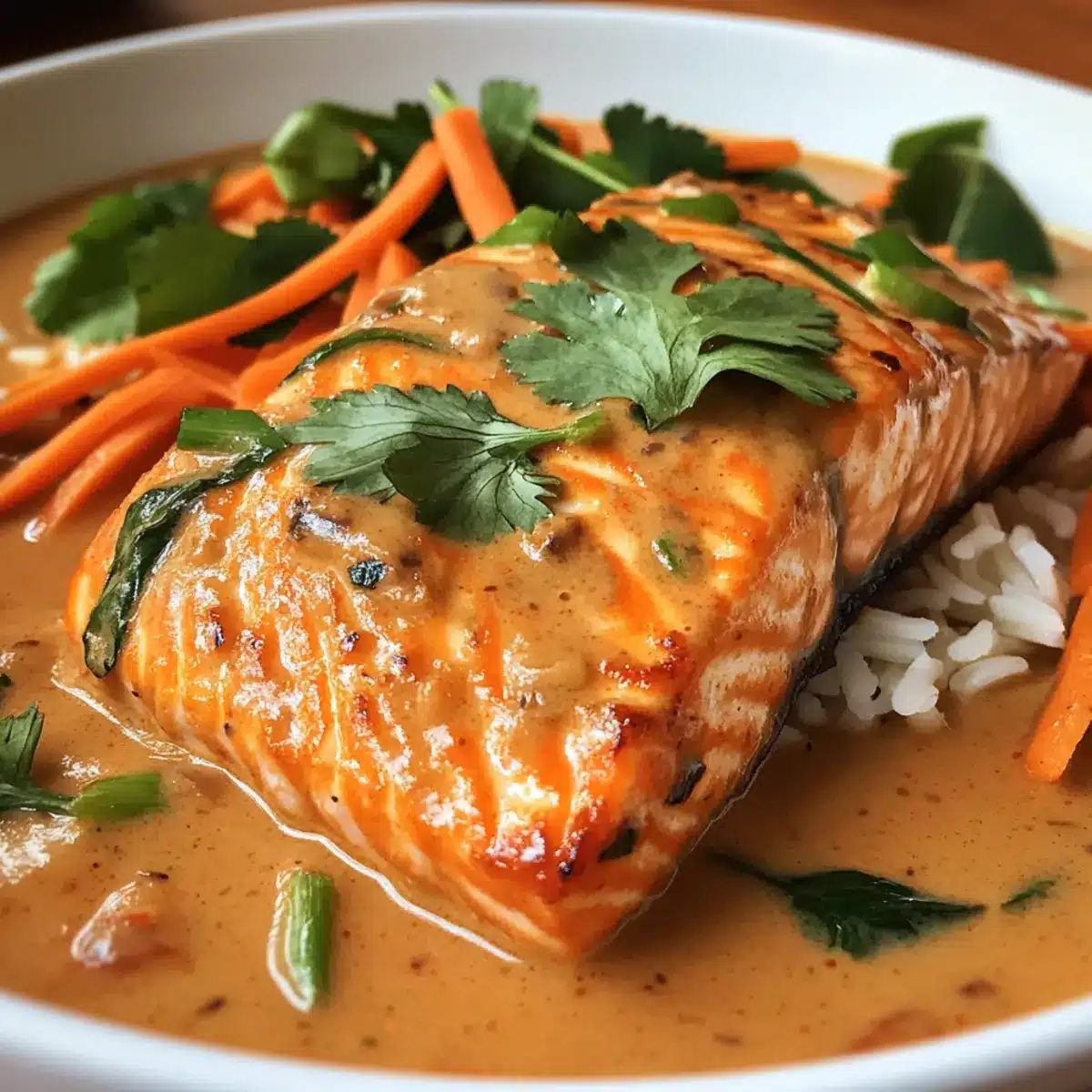
Creamy Salmon Coconut Curry: A Thai Comfort Food Delight
Ingredients
Equipment
Method
- Prepare the Salmon: Cut fresh salmon fillets into four equal pieces and pat dry with a paper towel. Season with salt and pepper. Let it come to room temperature.
- Sear the Salmon: Heat olive oil and butter in a skillet over medium-high heat. Place salmon fillets skin-side down and sear for about 5 minutes.
- Flip the Salmon: Gently flip salmon fillets and cook for an additional 2 to 3 minutes. Transfer to a plate and cover to keep warm.
- Sauté the Aromatics: Reduce oil in the skillet and add chopped onion. Sauté over medium heat for about 3 minutes.
- Add Garlic and Curry Paste: Stir in minced garlic and curry paste, cooking for about 1 minute until aromatic.
- Combine the Sauce Ingredients: Pour in fish sauce, coconut milk, brown sugar, carrots, and broccolini. Cook for about 5 minutes until the vegetables are tender.
- Finish with Lime and Salmon: Add lime juice and return salmon to the skillet. Heat for an additional 2 minutes.
- Garnish and Serve: Adjust seasoning with salt and pepper, then garnish with basil and cilantro. Serve immediately.
Leave a Reply